Social media marketing involves promoting products or services through social media platforms to reach target audiences. By utilizing various strategies, businesses can increase brand awareness, drive traffic, and engage with customers effectively.
This form of digital marketing is essential in today's interconnected world, where people spend a significant amount of time on platforms like Facebook, Instagram, Twitter, and LinkedIn. Effective social media marketing requires understanding audience demographics, creating engaging content, and leveraging analytics to measure success.
With the right approach, businesses can harness the power of social media to grow their online presence and connect with potential customers on a more personal level.
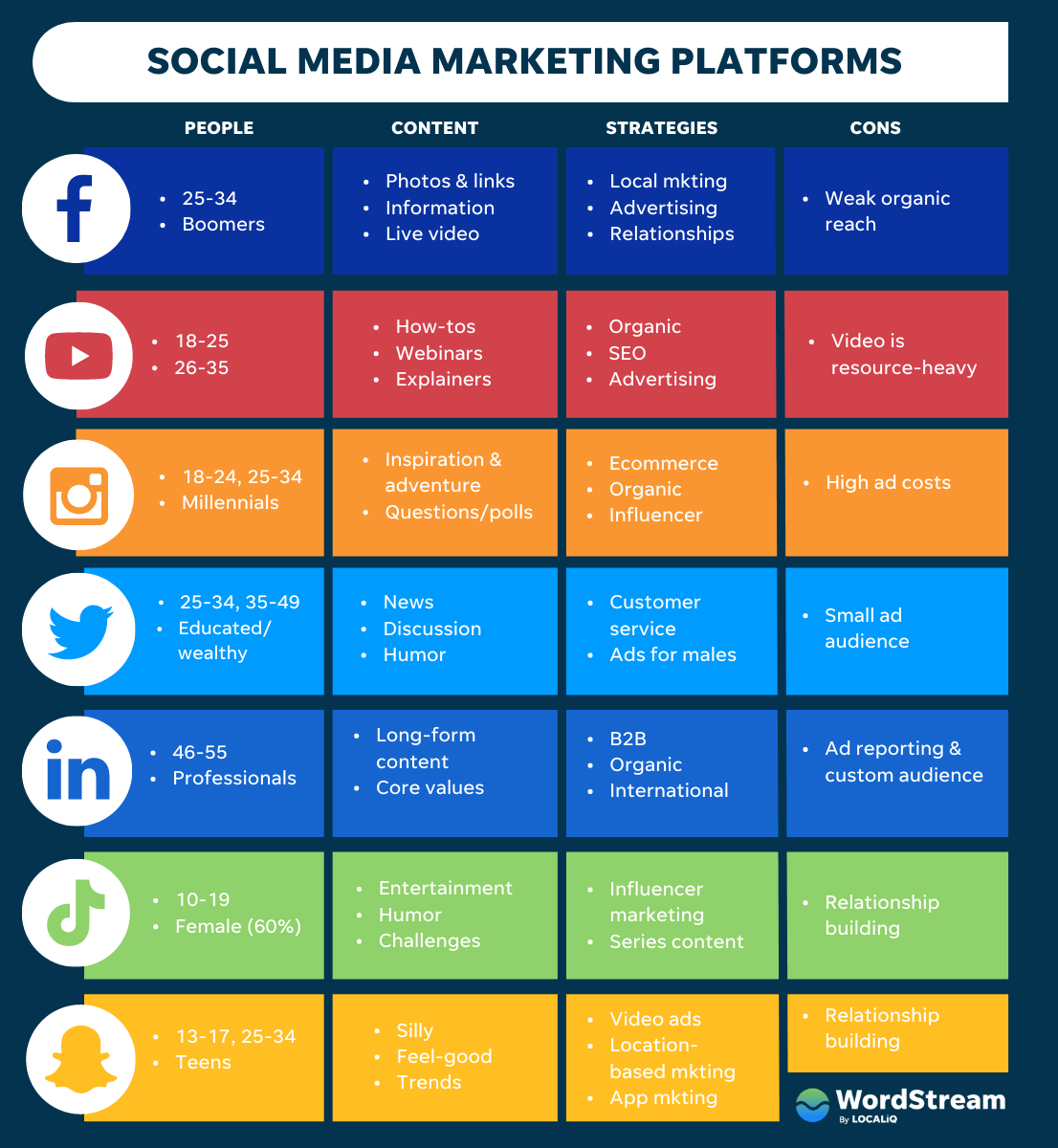
Credit: www.wordstream.com
The Rise Of Social Media In Marketing
Social media has completely transformed the way businesses connect with their audience and promote their products and services. This digital revolution has given rise to a new era of marketing, where brands can engage directly with their customers and build a loyal following. The impact of social media on marketing strategies cannot be overstated, as it continues to shape consumer behavior and influence purchasing decisions.
The Digital Landscape Transformation
Social media has revolutionized the digital landscape, providing businesses with unprecedented opportunities to reach and engage their target audience. With the rise of platforms like Facebook, Instagram, Twitter, and LinkedIn, businesses now have the ability to connect with customers on a more personal level, fostering a sense of community and trust.
Key Statistics: Users And Engagement
Social media platforms boast staggering numbers of active users and high levels of engagement. For instance, as of 2021, Facebook has over 2.8 billion monthly active users, while Instagram has more than 1 billion monthly active users. These platforms also see high levels of engagement, with users spending an average of 28 minutes per day on Facebook and 53 minutes per day on Instagram. These statistics highlight the immense potential for businesses to connect with a vast audience and drive meaningful interactions.
Setting Your Goals
To excel in social media marketing, establish clear, measurable goals. Define specific objectives like increasing engagement, driving website traffic, or boosting brand awareness. Crafting well-defined goals is crucial for a successful social media strategy.
Setting clear goals is essential to any successful social media marketing strategy. Without goals, it's impossible to measure your progress or determine the effectiveness of your efforts. In this post, we'll explore how to define your brand's objectives and set measurable targets using the SMART approach.Defining Your Brand's Objectives
Before you can set specific goals for your social media marketing, you need to define your brand's overall objectives. Ask yourself what your business hopes to achieve through social media. Are you looking to increase brand awareness, drive website traffic, generate leads, or boost sales? Your objectives should be specific, measurable, and aligned with your overall business goals.
Measurable Targets: The Smart Approach
Once you've defined your objectives, it's time to set measurable targets using the SMART approach. SMART stands for Specific, Measurable, Achievable, Relevant, and Time-bound. Here's how to apply this framework to your social media marketing goals:
| SMART Element | Example |
|---|---|
| Specific | Increase Instagram followers by 20% in the next 3 months |
| Measurable | Track progress using Instagram Insights |
| Achievable | Based on past growth rates and available resources |
| Relevant | Aligned with overall business goals of increasing brand awareness |
| Time-bound | Within the next 3 months |
Choosing The Right Platforms
When it comes to social media marketing, choosing the right platforms is crucial for reaching your target audience effectively. With so many options available, understanding the demographics and platform usage is essential. Additionally, aligning platforms with your brand image ensures consistency and maximizes engagement. Let's delve into these factors to help you make informed decisions for your social media strategy.
Demographics And Platform Usage
Understanding the demographics of each social media platform is key to reaching the right audience. Here's a breakdown of the popular platforms and their primary user demographics:
| Platform | Demographics | Platform Usage |
|---|---|---|
| Wide range of age groups, majority between 25-54 | Connect with friends and family, share content, join groups | |
| Skewed towards younger demographics, especially 18-34 | Visual storytelling, influencer marketing, brand discovery | |
| Varied age groups, popular among professionals and news enthusiasts | Real-time updates, news sharing, customer service | |
| Professionals, business owners, job seekers | Networking, industry insights, job opportunities | |
| Mainly women, focused on lifestyle, fashion, and DIY | Visual inspiration, idea sharing, shopping | |
| TikTok | Primarily younger audience, especially Gen Z | Short-form videos, trends, entertainment |
Aligning Platforms With Your Brand Image
Choosing the right platforms goes beyond demographics. It's essential to align them with your brand image and objectives. Consider the following:
- Brand personality: Determine if your brand's voice and tone match the platform's culture.
- Content type: Evaluate if your content can be presented effectively on the platform, such as images, videos, or text-based posts.
- Engagement potential: Research how users interact on the platform and whether it aligns with your goals, whether it's through likes, comments, shares, or direct messages.
By carefully considering demographics, platform usage, and aligning them with your brand image, you can optimize your social media marketing efforts and connect with your target audience in a meaningful way.
Crafting Your Content Strategy
When it comes to social media marketing, crafting a solid content strategy is essential for success. Your content strategy determines the type of content you create, the platforms you use, and the frequency of your posts. In this article, we'll explore two key elements of a successful content strategy: content types that work best and the importance of a content calendar.
Content Types: What Works Best
When developing your social media content strategy, it's important to consider the types of content that resonate most with your target audience. Here are some effective content types to consider:
- Informative Blog Posts: Creating blog posts that provide valuable information and insights relevant to your industry can position you as a thought leader and attract a loyal following.
- Engaging Videos: Videos have become increasingly popular on social media platforms. They allow you to tell stories, demonstrate products, and engage with your audience in a more dynamic way.
- Eye-Catching Infographics: Infographics are visually appealing and can effectively communicate complex information in a digestible format. They are highly shareable and can help increase your brand's visibility.
- Interactive Polls and Quizzes: Polls and quizzes are a fun and interactive way to engage your audience. They encourage participation and provide valuable insights into your customers' preferences and opinions.
- User-Generated Content: Encouraging your audience to create and share content related to your brand can help build trust and authenticity. User-generated content can include testimonials, reviews, and photos/videos featuring your products or services.
The Importance Of A Content Calendar
A content calendar is a crucial tool for managing your social media content strategy. It helps you plan and organize your content in advance, ensuring consistency and efficiency in your posting schedule. Here are some key reasons why a content calendar is important:
- Consistency: A content calendar allows you to maintain a consistent presence on social media. By scheduling your posts in advance, you can ensure a steady flow of content that keeps your audience engaged.
- Efficiency: Planning your content in advance saves time and effort. With a content calendar, you can batch-create content, schedule it, and focus on other important tasks.
- Strategic Alignment: A content calendar helps align your content with your overall marketing strategy. You can plan campaigns, promotions, and seasonal content in advance, ensuring a cohesive and targeted approach.
- Tracking and Analysis: By using a content calendar, you can track the performance of your social media posts and analyze what works best. This data can help you refine your strategy and optimize your content for better results.
By crafting a well-thought-out content strategy and utilizing a content calendar, you can maximize the effectiveness of your social media marketing efforts. Experiment with different content types, analyze the results, and adjust your strategy accordingly to achieve your marketing goals.
Engaging With Your Audience
Engaging with your audience is a crucial aspect of social media marketing. It involves creating interactive content, handling feedback and criticism, and fostering meaningful interactions. By actively engaging with your audience, you can build trust, loyalty, and brand advocacy.
Creating Interactive Content
Interactive content, such as polls, quizzes, and contests, encourages active participation from your audience. This fosters a sense of involvement and allows you to gather valuable insights into their preferences and behaviors. It also boosts engagement and encourages social sharing, expanding your reach organically.
Handling Feedback And Criticism
Addressing feedback and criticism in a timely and respectful manner demonstrates your commitment to customer satisfaction. It's essential to acknowledge both positive and negative feedback, and take the opportunity to improve your products or services. By openly addressing concerns, you can turn dissatisfied customers into loyal advocates.
Credit: www.wordstream.com
Leveraging Influencer Partnerships
In today's digital landscape, leveraging influencer partnerships is a powerful strategy for brands to increase their social media presence and reach a wider audience.
Finding The Right Influencers
When identifying influencers, look for those whose values and audience align with your brand's values. Consider engagement rates and authenticity.
- Search for influencers on platforms like Instagram, YouTube, and TikTok.
- Utilize tools such as BuzzSumo and Upfluence for influencer discovery.
Measuring The Impact Of Influencer Collaborations
Track the success of influencer collaborations by monitoring metrics such as engagement, reach, and conversion rates.
- Use UTM parameters to track traffic and conversions from influencer posts.
- Monitor social media analytics to assess the impact of influencer collaborations.
Analyzing And Adapting
Social media marketing success hinges on analyzing data and adapting strategies accordingly.
Key Metrics To Monitor
Track engagement, reach, and conversion rates consistently.
The Role Of A/b Testing In Refining Strategies
A/B testing helps optimize content, ads, and posting schedules.

Credit: blog.hubspot.com
Future Trends In Social Media Marketing
The future of social media marketing is constantly evolving, with new trends shaping the way brands engage with their audiences. Let's explore the upcoming trends that will impact social media marketing strategies.
Emerging Platforms To Watch
Keep an eye on emerging platforms like TikTok and Clubhouse that are gaining popularity.
These platforms offer unique opportunities for brands to reach younger audiences.
Predictions For Evolving User Behavior
User behavior is expected to shift towards more video content consumption.
Brands should focus on creating engaging and authentic video content to capture audience attention.
Frequently Asked Questions
What Are The Benefits Of Social Media Marketing?
Social media marketing helps businesses increase brand awareness, engage with customers, drive website traffic, and generate leads. It also allows for targeted advertising and provides valuable insights into consumer behavior.
How Can Businesses Measure The Success Of Social Media Marketing?
Businesses can measure the success of social media marketing through key performance indicators (KPIs) such as engagement, reach, conversion rates, and return on investment (ROI). Analytics tools provide valuable data for evaluating the effectiveness of marketing efforts.
What Are The Best Social Media Platforms For Marketing?
The best social media platforms for marketing depend on the target audience and business objectives. Facebook, Instagram, Twitter, LinkedIn, and Pinterest are popular choices for reaching and engaging with different demographic groups.
What Are Some Effective Strategies For Social Media Marketing?
Effective social media marketing strategies include creating compelling content, engaging with followers, utilizing influencer partnerships, leveraging paid advertising, and analyzing performance data to refine marketing tactics. It's essential to maintain a consistent brand voice and image across platforms.
Conclusion
To sum it up, social media marketing has become an essential tool for businesses to connect with their audience, increase brand visibility and drive sales. With the right strategy, businesses can leverage social media platforms to build a strong online presence and engage with customers in a meaningful way.
It's important to stay up-to-date with the latest trends and algorithms to ensure a successful social media marketing campaign. So, start planning your social media strategy today and make the most of this powerful marketing tool.
Comments
Post a Comment